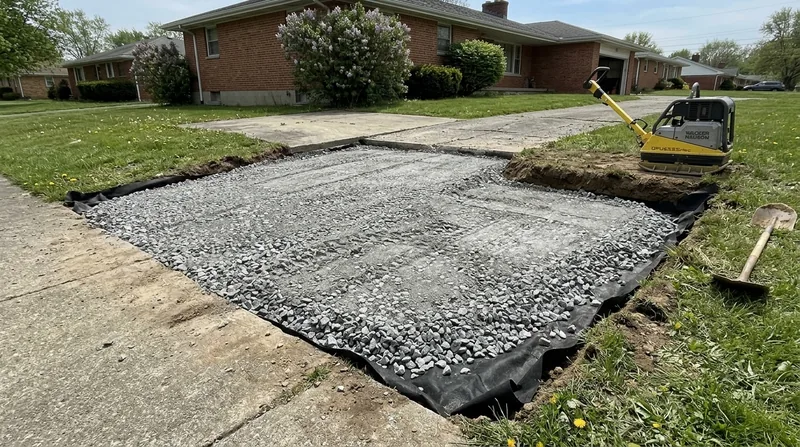




Gravel driveways serve thousands of Youngstown-area homeowners, from the rolling farmland toward Columbiana where Amish operations and dairy farms rely on long stone-and-clay lanes, to the suburban stretches of Boardman, Canfield, and Austintown where older ranch and cape-cod homes sit on properties too large or too steep for economical asphalt. The heavy glacial till clay that underlies the Mahoning Valley, combined with dozens of freeze-thaw cycles each winter and the weight of snow removal equipment, creates a unique grading challenge. Gravel driveway installation and grading in Youngstown requires understanding both the substrate and the seasonal forces that move it. We prepare and maintain gravel surfaces with the same precision we apply to asphalt, because a well-built stone drive outlasts poor work by years, and a poorly graded one becomes a washboard or a mud pit by spring thaw.
Why Gravel Driveways Matter in the Mahoning Valley
The North Side mansions of Youngstown, the mill-worker cottages of Brier Hill and Smoky Hollow, and the farmsteads scattered across Trumbull County all share one thing: long, often narrow drives that were never meant for hot-mix asphalt. Gravel is the traditional surface here, and it remains the right choice when the slope is steep, the traffic is light, or the property is rural. But gravel only holds its shape and sheds water properly if the base is built correctly and the crown is graded true. Winter heave, spring runoff, and the weight of a plow pushing snow all work against a flat or poorly drained drive.
- We establish proper crown and slope so water runs off and does not collect in the center or at the edges.
- We compact the subgrade and add a crushed-stone base layer that binds and supports the finished gravel surface.
- We size and specify the top-course stone to match your traffic, climate, and budget.
- We grade the shoulders and side ditches so runoff flows away from structures and does not undermine the drive edges.
A properly graded gravel drive can serve a rural property or a low-traffic residential setting for a decade or more without major work, provided it is maintained and regraded as needed. Poor grading fails in one season.
Key info: Many Youngstown-area properties zoned residential or agricultural do not require a permit for gravel driveway work, but municipalities like Canfield and Poland may require a driveway permit if the work involves a culvert, a curb cut, or changes to stormwater drainage. Check with your local building department before ordering stone; we help you navigate permitting once we understand your site.
How We Grade and Install Gravel Driveways Near Youngstown
Every gravel drive begins with the ground. We start by measuring the slope, assessing drainage, and identifying any soft spots or fill areas that need stabilization. The Youngstown region sits on clay and glacial till that can hold water, so we always slope the finished drive to shed runoff away from the property and toward the road or a drainage swale. We then excavate and compact the subgrade, add a base course of crushed stone or recycled asphalt millings, and finish with a top course of gravel sized to compact and bind under tire and weather.
- We measure the existing grade and design the slope to shed water without creating erosion gullies.
- We remove soft soil or peat and replace it with compacted fill if the drive is settling or spongy.
- We lay a base course of 3 to 4 inches of compacted crushed stone or recycled asphalt millings.
- We add a top course of 2 to 3 inches of finished gravel, sized to interlock and compact under traffic.
- We grade the edges and shoulders so the drive does not slump or erode into the yard or the road.
The entire job typically takes one to three days depending on the length and the condition of the existing base. If you have an older gravel drive that is washboarded or rutted, we can regrade and re-stone it as a maintenance project, which is far cheaper than building from the ground up. For more on the relationship between gravel and asphalt, see our page on recycled asphalt and millings driveways, which covers the base-course options in detail.
Local example: A farmstead near Columbiana with a half-mile lane running downhill through pasture toward the barn had settled and rutted after ten years. We regraded the entire lane, added 6 inches of recycled asphalt millings as base, and finished with 3 inches of crushed limestone. The new surface sheds spring runoff cleanly and has held smooth for three seasons. The work took two days and cost less than a quarter of what a full asphalt repave would have run.
Gravel Driveway Installation Methods and Materials
| Approach | Description | Best for |
|---|---|---|
| New installation from subgrade | Full excavation, compacted fill, crushed-stone base, and finished gravel top course with proper crown and shoulder grading. | Properties with no existing drive, severely failed drives, or sites where drainage is poor and the base must be rebuilt. |
| Regrading and re-stoning | Scraping off the top course, regrading the existing base, and laying fresh gravel without full excavation. | Established drives that are washboarded, rutted, or sinking but whose base is still sound and well-drained. |
| Recycled asphalt millings base | Using crushed recycled asphalt as the base course, which compacts harder and binds better than stone, topped with gravel. | Drives in areas with heavy runoff or freeze-thaw cycling; the recycled asphalt holds shape longer than virgin stone. |
| Gravel maintenance raking | Raking and re-spreading existing stone, filling ruts, and re-establishing crown without adding new material. | Drives less than five years old with minor surface settling; extends the life of the gravel by a year or two. |
Gravel Driveway Installation and Grading Cost in Youngstown: What to Expect
Gravel driveway work is priced by the linear footage, the width, the condition of the existing base, and the type and tonnage of stone you choose. A new installation on a standard residential drive typically costs more than regrading an existing surface, and a drive with poor drainage or soft subgrade will need extra base material and labor. Costs start at around $950 for a maintenance regrading project on a shorter drive, and rise from there based on length, width, and the scope of base preparation. A full new installation on a longer rural drive with complete base work can run several thousand dollars, but spreads that cost over a decade of reliable service.
The biggest cost variables are the length and width of the drive, the condition of the subgrade, whether the existing base can be reused or must be replaced, and the type of stone. Recycled asphalt millings cost less per ton than virgin crushed stone but hold better in freeze-thaw climates. Finished gravel (washed stone mixed with stone dust that binds) costs more than pit-run gravel but compacts faster and sheds water better. We measure your drive on site, assess the base, and provide a written estimate with tonnage specifications so you know exactly what you are paying for. See our full pricing page for detailed ranges and examples.
What to Look for When Hiring a Gravel Driveway Contractor Near Me in Youngstown
The driveway paving business attracts door-to-door crews with out-of-state plates offering to use "leftover stone from a job nearby" at a price that sounds too good to be true. It is. A legitimate gravel contractor in Youngstown will have a local address, local plates, verifiable references from properties you can drive past, and a written estimate that specifies the tonnage, the stone type, the base course depth, and the finished grade. We have been in business since 2011 and hold full insurance coverage; we provide free estimates within 24 hours at (234) 230-7377, and we never ask for a large cash deposit upfront.
- Ask the contractor for references on recent gravel drive jobs in Youngstown or nearby, and drive past them if possible.
- Get a written estimate that lists the tonnage of stone, the base course depth, and the finished grade and crown specifications.
- Verify that the contractor is fully insured and will help you navigate any local permitting requirements.
- Check whether your HOA or municipality has rules about driveway materials or extensions; some communities restrict gravel to certain zones.
- Confirm that the contractor will use a laser level or transit to establish proper slope and will compact the base with a roller.
If you are unsure whether your property needs a permit, or if you want to discuss whether gravel, recycled asphalt, or a different surface is right for your site, contact us for a free on-site estimate. We serve all of Greater Youngstown including Boardman, Austintown, Canfield, Poland, Warren, and surrounding townships.
Gravel Driveway Installation & Grading in Youngstown: Pricing Guide
| Service | Price | Details |
|---|---|---|
| Maintenance regrading and re-stoning | Starting at $950 | Existing drive, scrape and regrade top course, add fresh gravel, re-establish crown and edges |
| New installation with base preparation | Starting at $2,200 | Full excavation, compacted subgrade, crushed-stone base course, finished gravel, proper slope and shoulder grading |
| Recycled asphalt millings base layer | Starting at $1,400 | Prepared subgrade, compacted recycled asphalt base, finished gravel top course, best for freeze-thaw climates |
| Large or complex rural drive | On estimate | Half-mile lanes, poor drainage, steep slopes, or extensive fill work require on-site measurement and soil assessment |
| Estimate and site visit | Free | Written estimate with tonnage and depth specs, response within 24 hours at (234) 230-7377, no obligation |
Indicative pricing, the exact cost depends on square footage, finish, and site access. Free personalized estimate within 24h at (234) 230-7377.


