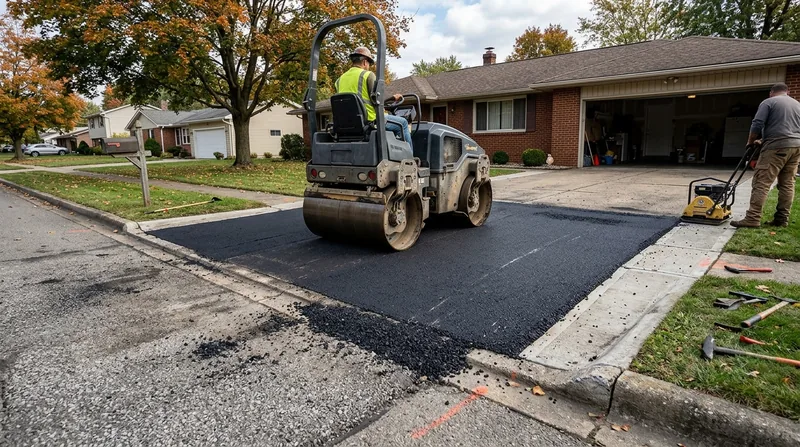




Sports Court & Path Paving in Youngstown means building a durable, all-weather surface for basketball courts, tennis courts, walking paths, and recreational areas across the Mahoning Valley. The glacial till clay and freeze-thaw cycles that dominate northeast Ohio winters demand asphalt that is installed thick, compacted properly, and sealed against the dozens of temperature swings that crack inferior work. Youngstown's rolling terrain, from the North Side mansions to the south-side mill neighborhoods to the suburban spreads of Boardman and Canfield, all contain properties with court and path ambitions, but few contractors understand the structural requirements that keep a recreational surface playable for fifteen to twenty years. We build these surfaces to last, with written tonnage specifications and proper base preparation that accounts for Youngstown's heavy soils and drainage patterns. Call us at (234) 230-7377 for a free, no-obligation estimate, or read on to understand what separates a court that cracks in two seasons from one that holds.
Why Sports Court & Path Paving Matters in Youngstown and the Surrounding Area
A recreational court or path is an investment in property value, family use, and community gathering. In Youngstown, where winters are long and the ground heaves with frost and thaw, a poorly built court becomes a liability within a year or two. The asphalt must be thick enough to handle the structural load of play, properly crowned to shed water away from the base, and compacted to a density that resists the edge cracking and surface spalling that freeze-thaw brings. Most contractors cut corners on base preparation, skip tonnage specs, or use recycled millings instead of virgin hot mix, all of which fail catastrophically when the first hard winter arrives.
- We specify base thickness and hot mix thickness in writing, so you know exactly what you are paying for and what will be installed.
- We crown the court or path so water drains away from the edges and does not pool at the perimeter, where freeze-thaw does its worst damage.
- We use virgin hot mix asphalt rated for the traffic and climate, not recycled millings or inferior blends that soften in summer heat and crack in winter cold.
- We proof-roll the base before paving to confirm it is compacted and stable, catching soft spots before asphalt goes down.
- We schedule installation in the proper season, April through November in this region, so the asphalt cures correctly and bonds to the base.
A court or path built this way stays playable and level for fifteen to twenty years, even in Youngstown's demanding climate.
Key info: The City of Youngstown and the municipalities across the Mahoning Valley (Boardman, Austintown, Canfield, Poland, Warren, Niles, Girard, Struthers) require permits for new impervious surfaces, including sports courts and recreational paths. Stormwater rules and setback requirements vary from village to village. We help you navigate local permitting, but you should verify requirements with your local building department before committing to a design. See the City of Youngstown Building Department for permit guidance.
How We Build Sports Courts and Paths in Youngstown: The Process
Every court and path starts with the ground. Youngstown sits on heavy glacial till clay over sandstone and shale, with old mill fill and mine workings in places. This soil is stable but dense, and it sheds water poorly. We begin by excavating to proper depth, inspecting for soft spots or saturated layers, and grading to a slope that sheds water toward drainage. We then place a compacted base of crushed stone, proof-roll it to confirm stability, and only then bring in the hot mix asphalt. This sequence takes time and discipline, but it is the only way to build a court that survives Youngstown winters.
- We meet on site, measure the area, and discuss the court or path design, including slope, drainage, and any utility locates required by Ohio 811 law before we dig.
- We excavate to the depth specified in our estimate, remove unsuitable soil, and inspect the base layer for stability and drainage capacity.
- We place and compact a crushed-stone base, typically four to six inches, and proof-roll it to confirm it will support the asphalt without settling.
- We bring in hot mix asphalt, spread it to the specified thickness (typically two to three inches for a recreational court), and compact it with a heavy roller while it is still hot.
- We allow the asphalt to cure for a minimum of forty-eight hours before opening the court to play, and we recommend no sealcoating for the first six to twelve months while the asphalt hardens.
- We provide written documentation of base thickness, asphalt tonnage, and compaction, so you have a record of what was built.
This process ensures the court is level, properly drained, and ready for years of use. For more information on our base preparation and site work, see our grading and site preparation page.
Local example: A homeowner in Canfield built a half-court basketball pad on a slope facing the Mahoning River valley. We excavated eighteen inches, placed six inches of compacted base, and installed three inches of hot mix with a two-percent crown to the north. The court has been in use for eight years without cracking or settling, even through the heavy freeze-thaw winters of 2015 and 2017. Proper base work made the difference.
Sports Court and Path Paving Methods
| Approach | Description | Best For |
|---|---|---|
| Full-Depth Installation | Excavate to subgrade, place compacted base, install virgin hot mix asphalt to specified thickness, proof-roll and document tonnage. | New courts and paths on virgin ground, or replacement of failed surfaces where the base is compromised. |
| Overlay on Existing Base | Inspect the existing base for stability, mill or remove the old asphalt if necessary, place new compacted base material if needed, install virgin hot mix over a tack coat. | Resurfacing an aging court where the base is still sound and the subgrade is stable. |
| Tar and Chip Path | Compact a crushed-stone base, spray a tack oil, and apply a layer of stone chips, rolled and compacted, for a rustic, permeable surface. | Walking and jogging paths in rural or suburban settings where a traditional asphalt court is not needed. |
| Recycled Asphalt Millings Path | Compact a stone base and top with recycled asphalt millings, which bind together over time and provide a low-cost, permeable walking surface. | Budget-conscious paths and recreational areas where foot traffic is light and freeze-thaw durability is not critical. |
Sports Court and Path Paving Cost in Youngstown: What to Expect
Sports court and path paving in Youngstown starts at approximately $8,500 for a small half-court or a short residential path, and scales upward depending on size, site conditions, and the quality of base preparation required. A full-size recreational court, forty feet by sixty feet, typically runs $18,000 to $28,000, depending on excavation depth, soil conditions, and whether utilities or existing pavement must be removed. A longer path through a yard or across a property can range from $3,500 to $12,000 depending on length, width, and base stability. The primary cost drivers are the depth and stability of the base, the thickness of the asphalt layer, and the condition of the site at the start.
We provide written estimates that specify the base thickness, the tonnage of hot mix asphalt, the compaction method, and the total cost. This transparency allows you to compare our work to other bids and to understand exactly what you are paying for. If you are considering asphalt resurfacing or an overlay instead of a full replacement, we will assess the existing base on site and recommend the most cost-effective approach. Get a free estimate by calling (234) 230-7377 or visiting our pricing page for more detail on what factors affect the final cost.
Sports Court and Path Paving Near Me: What Youngstown Homeowners Should Know When Hiring a Contractor
Hiring the right paving contractor for a court or path is a decision that affects the surface for fifteen to twenty years. Start by asking any contractor for a written estimate that includes base thickness, asphalt tonnage, and compaction specs. Verify that the contractor carries full liability insurance and can provide a certificate of insurance on request. Check references from recent court or path work in the Youngstown area, Boardman, Canfield, or Warren, and ask those homeowners specifically about how the surface has held up through the winters since installation. If your property is in an HOA community, confirm that the court or path design complies with architectural guidelines before you commit. Verify with your local building department whether a permit is required, because Youngstown and the surrounding municipalities have different rules.
- Ask for a written estimate that specifies base thickness in inches and asphalt tonnage per square foot, so you can compare apples to apples.
- Request references from court and path projects completed in the last three to five years in the Youngstown area or nearby communities.
- Confirm that the contractor carries liability insurance and is willing to provide proof before work begins.
- Check with your local building department to confirm whether a permit is required and what drainage or setback rules apply to your property.
- If your property is part of an HOA, review the design with the architectural committee before you sign a contract, to avoid costly revisions mid-project.
- Avoid contractors who offer unsolicited door-to-door quotes, demand a large cash deposit, or cannot provide a written contract with specific tonnage and thickness details.
We are local to Youngstown, fully insured, and ready to discuss your court or path project. Call us at (234) 230-7377 or request a free estimate online.
Sports Court & Path Paving in Youngstown: Pricing Guide
| Service | Price | Details |
|---|---|---|
| Residential half-court or small path | Starting at $8,500 | Includes excavation, compacted base, and three inches of virgin hot mix asphalt with proper crown and drainage. |
| Full-size recreational court (40 ft x 60 ft) | Starting at $18,000 | Depends on site conditions, base depth, and soil stability; most courts in this range in Youngstown area. |
| Longer residential or community path | Starting at $3,500 | Per 100 linear feet of four-foot-wide path with compacted base and two-inch asphalt, longer runs reduce per-foot cost. |
| Overlay or resurfacing existing court | On estimate | Cost depends on condition of existing base and whether removal or mill-and-overlay is needed; site inspection required. |
| Travel and site visit | Included | No separate charge for estimates or site visits within Youngstown and surrounding service areas. |
| Free estimate | No obligation | Response within 24 hours at (234) 230-7377; written specs provided before you decide to book. |
Indicative pricing, the exact cost depends on square footage, finish, and site access. Free personalized estimate within 24h at (234) 230-7377.


